Why logos are terrible proxies
I keep coming back to this one dinner meetup I was in a while ago. Everyone i met mostly talked about them in the same pattern - name, then the company they work at. That became the whole identity. No one talked about what they actually enjoy doing, what they are good at, or what they care about. By the end of the dinner, I realized I hadn’t learned anything real about the people in the room. I walked away knowing a handful of logos, but not a single person, and that feeling stayed with me longer than I expected.
What makes this uncomfortable to admit is that I’ve behaved the same way for most of my life, especially as a founder. Before meeting a VC, a potential hire, or even a user, I’d already formed opinions based on where they worked or what title they had. That framing quietly shaped the conversation. I’d talk about their company, their background, their credentials, and even when I asked questions, they stayed shallow because I thought I already knew who they were. I’d almost always scan their LinkedIn beforehand, line by line, logos and titles first. It became muscle memory, and only later did I realize how much that habit flattened people.
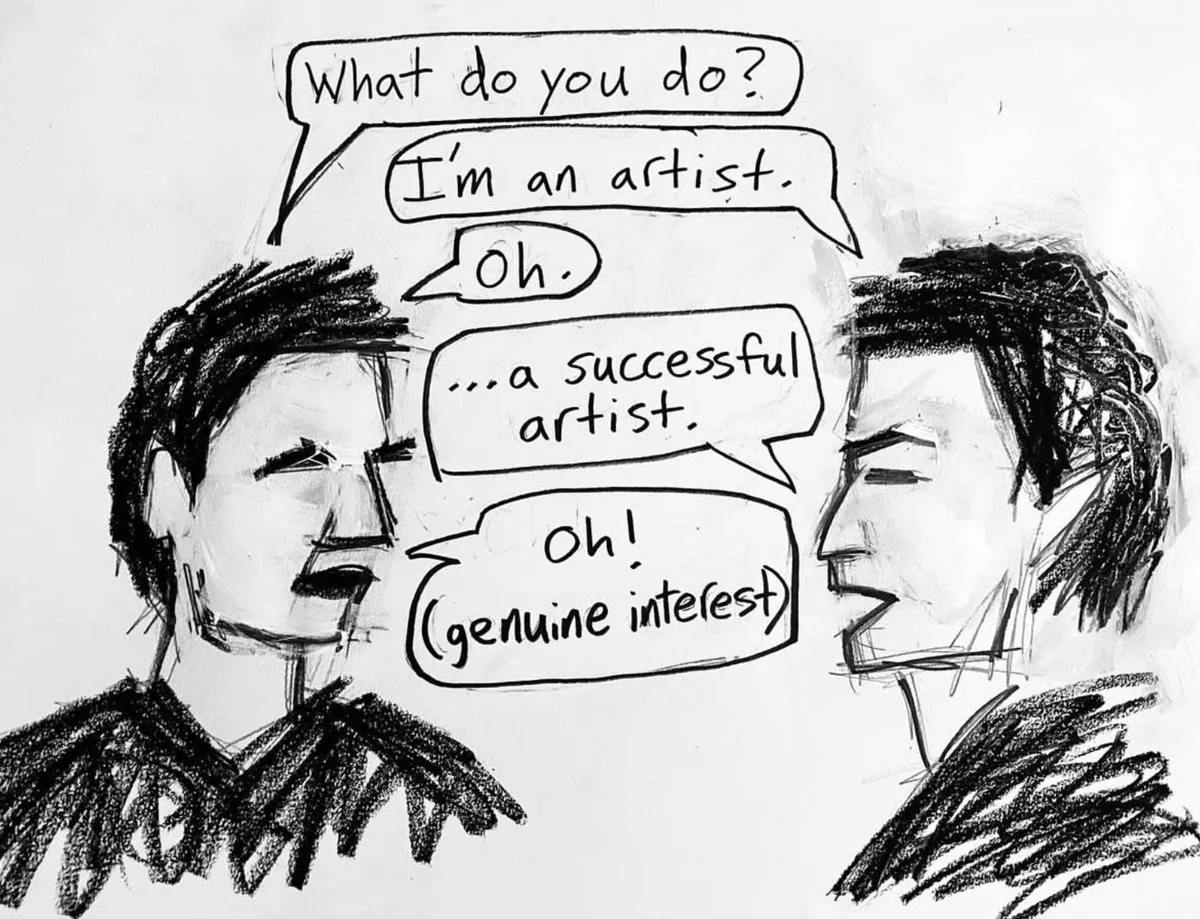
I recently came across this simple drawing that captures this perfectly. Nothing about the person changes, except the signal. That’s basically how most conversations work. Our brains look for shortcuts when information is limited, and status signals help us decide quickly who is worth paying attention to. Prestige feels like information, even when it isn’t. The problem is that once we anchor on those signals, curiosity shuts down and everything stays at the surface.
That sent me down a rabbit hole to learn what thoughtful, genuine questions actually look like — questions that help you understand how someone thinks rather than where they’ve worked. I kept seeing this pattern in the work of people who study judgment and decision-making instead of status: Daniel Kahneman on heuristics, Philip Tetlock on forecasting and belief, Charlie Munger on inversion and mental models, and more. The common thread is simple: delay judgment, reduce noise, and stay curious longer than feels efficient. So instead of leading with logos or titles, what kinds of questions can you actually ask?
Some of the ones I’ve really liked are these:
What are you working on right now that you can’t stop thinking about? This forces someone to talk about attention and taste, not their resume.
What do you believe that most smart people around you disagree with? This is a clean way to surface independent thinking without sounding combative.
How did you come to that conclusion? This simple question reveals what someone observed, what they assumed, and what they ignored.
What would change your mind? High-signal people like this question because it shows whether someone is truth-seeking or identity-defending.
What’s the mistake you keep seeing people make in your space? You quickly learn their pattern recognition, and whether they can explain things clearly.
What do you think you’re unusually good at? This works far better than “what do you do,” because real strengths don’t always map to titles.
What’s a hard tradeoff you’ve had to make recently? Logos hide tradeoffs. Tradeoffs reveal judgment.
What did you change your mind about in the last year? The best people update. The worst people defend.
If this goes well, what had to be true? This de-noises conversations by turning vague optimism into concrete assumptions.
What are we missing? People who are actually good tend to ask questions that widen the map instead of narrowing it too early.
I’m still learning to let people define themselves without steering the conversation toward where they work or what their title is. Some of the people I’m closest to now aren’t even LinkedIn connections, and that doesn’t feel accidental. Logos might help with sorting when time is tight, but they’re a terrible proxy for understanding humans. The more you strip them away and focus on how people think, the more real and useful conversations become.
I’ve found a bunch more questions like this through my research. If you enjoyed these, feel free to DM me on X with your thoughts.
Note: Written from my own experience, with Claude helping me structure my rambling thoughts into something readable