Why I Don’t Want to Go Viral
I am a huge fan of building distribution as a product. One of the simplest success criteria is whether what you’re writing, building, or talking about can reach scale touch millions of people and, in the most basic internet language, “go viral.” For a long time, I treated that as a clean metric. But lately, that whole metric has lost its charm for me, and I've been trying to understand why.
It started when I opened my feed and saw a post about a new product. I loved it immediately..the idea felt fresh, the experience of stumbling onto it felt rare, like the internet used to make me feel before everything became so predictable. I saved it, sent it to a friend, and moved on with that quiet satisfaction of finding something early. Then I saw it again. Same post, same screenshot, same words..just reposted by someone else. No big deal, that happens. But it didn't stop. I saw it a third time, then a fifth, and by the end of the day I must've seen some version of it twenty times - people adding their own one-liner on top, the same predictable hook, the same rhythm playing out over and over. The post hadn't changed, but my relationship to it had completely. What felt like discovery the first time felt manufactured and almost untrustworthy by the twentieth. The content had become background noise, and the performance of sharing it had become the whole headline in my mind.
And I can't pretend I'm above any of this. I've fallen into it too. When you're building something, distribution isn't optional — it's oxygen. You learn the playbook, you start thinking about timing and reach and what might travel, and somewhere along the way the game becomes more about the mechanics than the meaning. But with a little more distance now and a more zoomed-out view, I've started wanting a different kind of outcome. I think the audience does too — because how important is it to build real trust when you can't even tell anymore if the person posting is human.
There's a famous idea from Kevin Kelly called 1000 True Fans — the argument being that you only need 1000 people who genuinely love what you do, who will follow you anywhere, who will buy everything you make, and that's enough. It's a beautiful idea, but when I first heard it, I honestly filed it under small ambitions — a consolation prize for people who couldn't crack the mainstream. I think that was really silly of me, because I now believe that 1000 true fans might actually be the only honest path to something genuinely big. Not as a destination, but as a process..
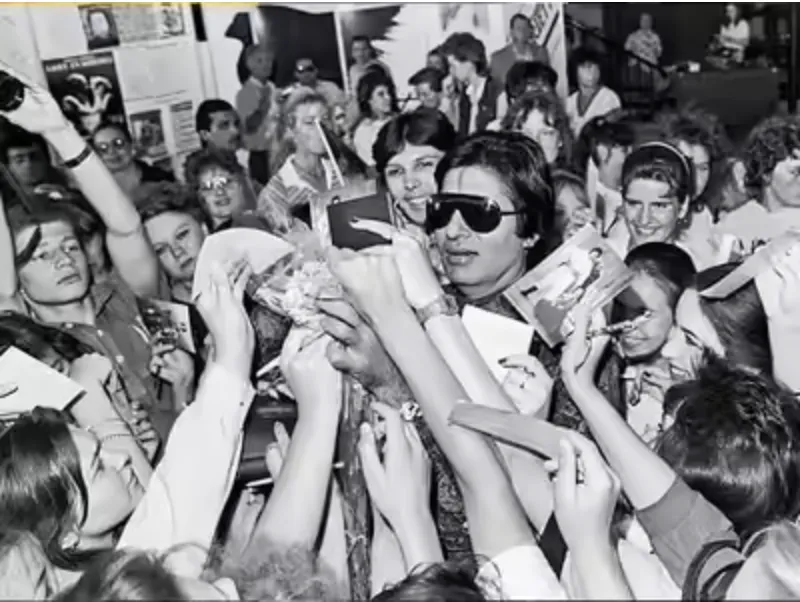
Because when a true fan shares your work, they don't just forward it, they explain it. They say you have to read this because, and that because is everything. The idea arrives with its meaning intact, and the person receiving it already understands why it matters before they've even read a word. That's not just a warmer introduction, that's a fundamentally different kind of distribution.
The examples are hiding in plain sight. Notion didn't go viral early it had a small cult of power users who explained it to everyone they knew, and by the time it was mainstream, people arrived pre-sold not because they saw an ad but because someone they trusted had already done the translation work. Naval Ravikant spent years writing dense, specific ideas to a small audience, and when he eventually reached millions, those millions understood exactly what he stood for because the early true fans had been carrying his ideas forward, intact, for years. The pattern is always the same depth first, then scale — but the depth is what makes the scale mean something.
So I'm trying to commit to doing the harder work now. Asking myself who are the hundred people who, if they deeply understood this idea, would carry it into their own worlds with full conviction — who are the people that won't just reshare but will explain, whose audiences will arrive already curious rather than casually scrolling past.
I believe that compounds. Slowly at first, then in ways that are very hard to reverse.
Note: Written from my own experience, with Claude helping me structure my rambling thoughts into something readable